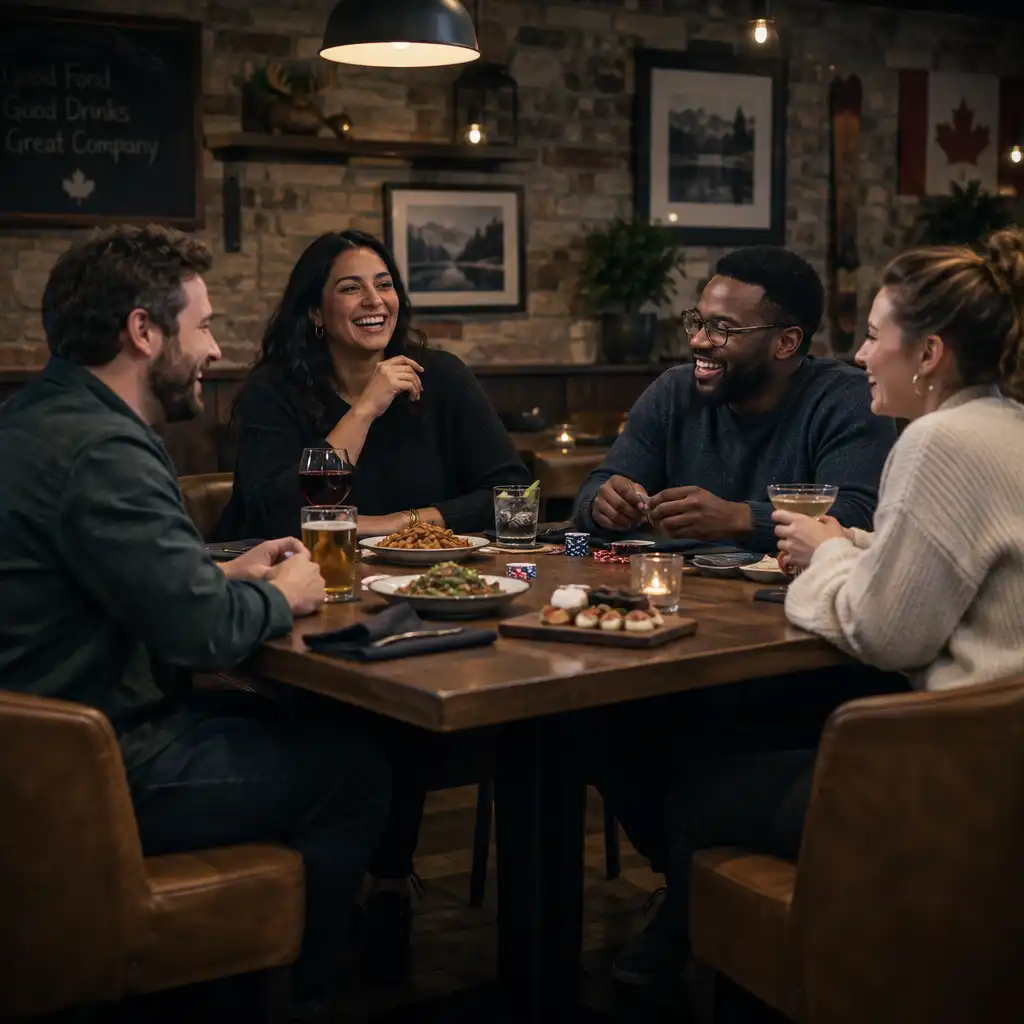
What to Expect at a Restaurant Poker Night

A relaxed evening of cards, food, and conversation. Restaurant poker nights are casual Texas Hold'em social events held at local pubs, diners, and bistros. They are not high-stakes tournaments; they are friendly gatherings where you can learn the game, meet neighbours, and enjoy table service while you play.

The Basics of Restaurant Poker

Casual Texas Hold'em

Most restaurant poker nights use Texas Hold'em because it is easy to learn and fast to play. Each player gets two private cards, and five community cards are dealt face-up. The goal is to make the best five-card hand. No-limit or fixed-limit betting structures vary by venue. Blinds are used to keep the action moving. Dealers may be volunteers, rotating players, or hired staff.

Table Service

One of the best parts of restaurant poker is that you can order food and drinks while you play. Servers circulate among tables, so you don't have to miss a hand to grab a snack or refill your coffee. Menus are usually available at the table or nearby. Some venues offer poker-night specials. Tipping practices follow normal restaurant customs.

Social, Not Serious

These nights are designed for fun and community. Players chat between hands, share tips, and celebrate good plays. The atmosphere is more like a neighbourhood gathering than a high-pressure tournament. Beginners are encouraged to ask questions. Players often rotate tables to meet new people. Laughter and friendly banter are common.

Step by Step: How the Evening Unfolds

  1. Arrival and Seating

    When you arrive, check in with the host or organizer. They will assign you to a table, often balancing experience levels so beginners are comfortable. Seating is usually first-come, first-served, but some venues allow reservations. Bring a valid ID to verify age (18+ or 19+ depending on province). Buy-in amounts, if any, are collected at this time. You may receive a table number or seat assignment.

  2. Dealing and Blinds

    The dealer shuffles and deals two cards to each player. Blinds (forced bets) are posted by the two players to the left of the dealer button. Blinds increase on a set timer, usually every 15-20 minutes, to keep the game moving. The dealer button rotates clockwise after each hand. Blind levels are announced or displayed on a screen. Players act in turn, starting to the left of the big blind.

  3. Playing Hands

    Each hand follows standard Texas Hold'em rules: pre-flop, flop, turn, and river, with betting rounds in between. Players can fold, call, raise, or check when allowed. The best five-card hand wins the pot. No-limit means you can bet all your chips at any time. Fixed-limit caps the bet size per round. Showdown occurs if two or more players remain after the river.

  4. Table Service and Breaks

    Throughout the evening, servers take food and drink orders at the table. Scheduled breaks allow players to stretch, use the washroom, or step outside. Breaks usually align with blind level increases. You can order at any time, but be mindful of the action. Some venues pause the clock during breaks. It's polite to tip your server as you would at a regular meal.

  5. Wrapping Up

    The night ends at a predetermined time or when a winner is declared. Players cash out their chips (if applicable), settle any food or drink tabs, and thank the host. Many venues announce the next week's game before everyone leaves. Prizes, if any, are usually modest and social in nature. Some nights are purely for fun with no cash prizes. Players often exchange contact info for future games.

The Host's Role

Keeping the Game Fair

Hosts ensure that rules are followed and that the game runs smoothly. They may act as dealers, manage the blind timer, and settle disputes. Their goal is to create a fair and enjoyable experience for everyone. Hosts are usually volunteers or venue staff. They can explain rules to beginners. They enforce time limits and betting procedures.

Welcoming Beginners

A good host makes new players feel comfortable. They may offer a quick tutorial before the game starts, pair beginners with experienced players, or provide cheat sheets with hand rankings. Some venues host a free 'learn to play' session before the main game. Hosts often introduce players to each other. Questions are always welcome.

Managing the Schedule

Hosts coordinate with the restaurant to set the start time, blind levels, and break schedule. They also communicate any changes to players and may maintain a contact list for regulars. Start times are usually between 6:00 and 8:00 pm on weeknights. Hosts may use a timer app or physical clock. They announce the final hand or last level.

League Standings and Friendly Competition

Points and standings. Some restaurant poker nights are part of a casual league. Players earn points based on how they finish each night, and standings are updated weekly. The top players at the end of a season may receive small prizes or bragging rights. Points systems vary: some award points for attendance, others for finishing position. Seasons may last 8-12 weeks. Standings are often posted on a board or shared online. League formats and prizes vary by venue; not all nights are part of a league.

What to Expect as a New Player

  • You can usually join at any time.
  • Attendance is not mandatory every week.
  • Some leagues have a 'beginner' division or handicap system.

Weeknight Scheduling

Typical nights and times. Most restaurant poker nights are scheduled on weeknights, often Tuesday, Wednesday, or Thursday, starting between 6:00 and 8:00 pm. This avoids conflicts with weekend crowds and allows the restaurant to offer a special menu or drink deal. Games usually last 2-4 hours. Some venues run multiple nights per week. Start times are chosen to accommodate after-work schedules. Schedules vary by venue and season; always check the venue's posted schedule.

Finding a night near you. The best way to find a restaurant poker night is to use our Browse Local Nights directory. It lists participating venues with their schedules, formats, and contact information. You can filter by city or province. Each listing includes age requirements and any entry fees. Schedules are updated regularly by venue hosts.

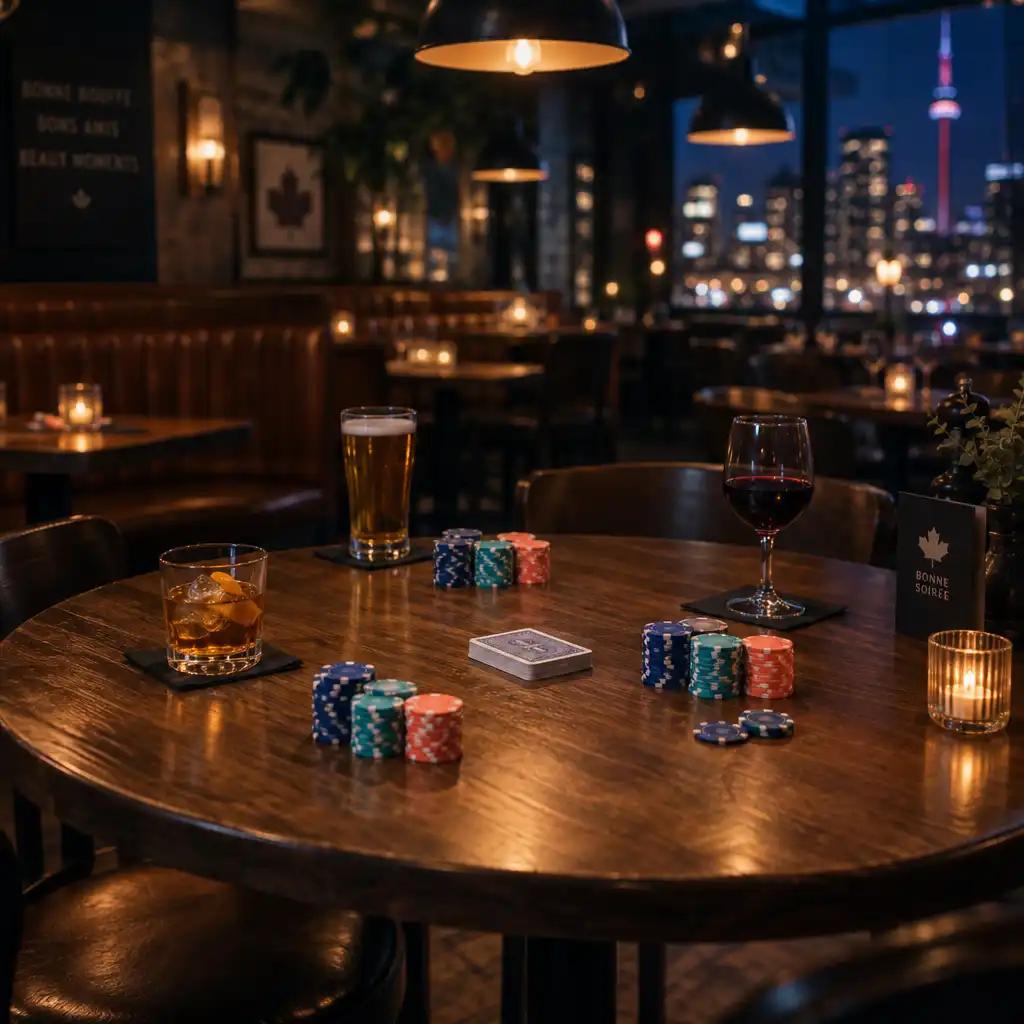
A cozy bistro table set up for a casual poker night with chips, cards, and drinks under warm pendant lights
A typical restaurant poker table setup, ready for a weeknight game.

What You Need to Know Before You Go

Age Requirements

In Canada, the legal age to participate in poker nights is 18 or 19, depending on the province. Alberta, Manitoba, and Quebec allow 18+, while other provinces require 19+. Always bring valid ID. Venues may have stricter age policies. Some restaurants are all-ages until a certain time. Check the venue's policy before you go.

Buy-ins and Costs

Many restaurant poker nights are free to enter, but some charge a small buy-in (usually $5-$20) that goes toward prizes or venue costs. You may also be expected to order food or drinks. Buy-in amounts are always stated in advance. Some nights are 'free roll' with no entry fee. Bring cash for buy-ins and tips. Buy-in amounts and prize structures vary by venue.

Etiquette Basics

Good etiquette makes the night enjoyable for everyone. Be respectful of the dealer and other players, act in turn, and keep your cards on the table. Avoid discussing hands in play. Don't splash the pot; place chips neatly. Announce your actions clearly. Tip your server as you would at a regular meal.

Variations by Venue and Province

No two nights are identical. While the core format is similar, every venue adds its own twist. Some use different blind structures, others have themed nights or special prizes. Provincial laws also affect age limits and prize rules. Always check the venue's posted details or contact the host before attending. Blind levels and starting stacks can vary. Some venues use electronic timers, others manual. Prize structures range from gift cards to free meals.

Ready to Play?

Now that you know how restaurant poker works, it's time to find a game near you. Browse our directory of local nights to see schedules, formats, and venue details.